Showing posts with label freegan. Show all posts

Tuesday, January 21, 2014

From grass to bulging veggie garden in under six months

  I’ve been reading tutorial posts elsewhere about starting veggie gardens, and no wonder people give up on the idea before they start. Why do people have to complicate things which are actually quite simple? Or turn it into a mammoth shopping list that makes buying vegies for the rest of your life seem like the cheap deal?

  We are experts at starting veggie gardens. Before you pass me off as an up-myself snob, remember that the husband and I have lived in well over 20 houses in our 13-odd years together. Starting them, we excel at. Learning to keep them going well for years………..well, maybe one day we’ll get the chance. Our way involves using your muscles for the initial start-up, but not your wallet. Most people could do with using their muscles more, so don’t be shy-get out there, toughen up, and do some work you can be proud of and reap the benefits from for years.

PC246470    200sq/m, less than six months

Here’s our well-honed method.

  Pick a sunny spot. Here in Australia, with our intense sun, you can get away with some shade. But try to minimise it. If you have lots of shade everywhere, go ahead and do it anyway, but resign yourself to leafy veg. Under trees is also not so good-they’ll steal from your vegies. Start with a manageable size-you can always expand later once your original area is set-up, but beginning with a huge area can be discouraging.

  Peel off the grass. All of the grass. A mattock is the best for this. You may think you want lovely grassy paths, with rocks/sleepers for edging, but you don’t. Well, you won’t once the reality of them sinks in. Grassy paths suck the nutrients and water from your garden, and the grass invades through your pretty edging. Without herbicide, you’ll have a grassy garden fairly quickly. As you’re not a ruminant, and cannot digest the grass, that is bad. Make a compost pile with the sod.

PA226067

  Dig over the dirt. It doesn’t need to be deeply dug, just rough it up a little. A fork is good for this-sink in the tines, wiggle it around and lever it part of the way up. Repeat. Throw on as much manure as you can get-fresh, old, from any farm animal will do. Manure is plentiful, and there’s always people around wanting to get rid of it-find people who keep animals and don’t garden, try stables, ask any farmers you know. Ask on local online groups if anyone wants you to come around and clean up their mess. You’ll meet some interesting people. We’ve spent a lot of time wandering in paddocks picking up muck-but we most definitely don’t go to Bunnings and buy bagged manure. Actually, we don’t go to Bunnings ever, but that’s another story.  Spread the lovely muck over your dirt, and inhale the beautiful stink-that stink is the smell of fertility, and future food for you.

Cover the lot with mulch. Sugar cane, lucerne, pea straw, whatever’s available in your area. Again, if you look you can usually pick up bales of straw fairly cheaply from the side of the road. Or, you can rake up the council mowings from the side of the road in the country. Water it well, then rest your aching muscles for a week or so.

  Now, it’s time to plan. Decide where you want your beds to be, and tramp paths around them. Stomp down hard and you should soon be able to see them clearly. Your paths will be manured and mulched just as heavily as your beds-and why not? Your plants can spread their roots out there, so lets make it tasty for them. (Admittedly, we currently have bare paths, but we have an unfair amount of local red-bellied black snakes). Make sure your paths and beds are a decent width, but that you can reach the centre of the beds. Water it again.

PB246297

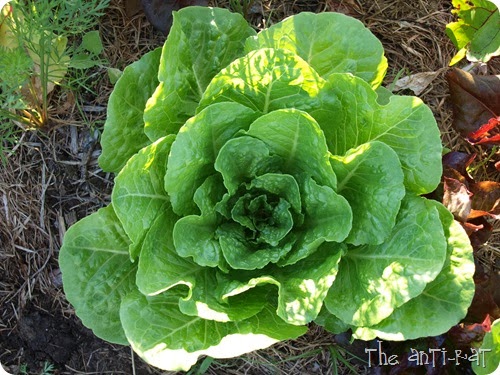
  Plant seeds, according to season. Scrape the mulch back, make sure the soil is damp, break up any clods if needed, and plant away. Seedlings are too much bother-home-started seedlings have their place, but for now it’s an unnecessary complication. Keep it simple. Plant your plants at random, forget about neat beds of one type of plant. Lettuces grow well in the shade of other plants, radishes grow so fast you pull them before the tomatoes next to them are big enough to be bothered, and so on. In the beginning your germination will be poor, so plant thickly. You can always thin, and eat the thinnings. But you want success, so go crazy. Seeds are cheap. My favourite supplier is Rangeview Seeds.
PA226069

  Keep in watered, and watch it grow. Attention is the key-go for a walk around it every day. Get down low, and really look. Learn what your plants, and your weeds, look like when they come up. Keep an eye on the bugs and work out which ones are helpful, and which you should feed to the chooks. Learn what grows well together, and what doesn’t. Work out what grows really well in your area and gather lots of recipes containing it. Conversely, learn what you shouldn’t bother with, as it gets struck down with pests/disease, or hates the weather. This step is not optional if you want garden success-it doesn’t take much time, but attention is the difference between success and failure.

 PC286496 A visitor in the corn patch

  There you go. You’re a gardener. That wasn’t so hard, was it?

Wednesday, April 20, 2011

Making a worm farm from a bathtub

Yes, I love bathtubs. Here’s how to make a worm farm that actually works* from one. Total cost for us-$10.60 ($10 for bathtub, $0.60 for bucket. Bricks free, tin free, timber free (from pallets)-even the nails are reclaimed. Allow more if you’re not a freegan.

 DSCF7722

Find yourself a bathtub, from the tip shop etc. Any pipe fitting is fine-we’ve even made one from a tub that had the entire plug area cut out. You need to find a place to position in where it’s sheltered from the weather-no rain, and very little to no direct sunlight. If you’re in a colder area you may want to position it so it gets some winter sunlight, as this will keep the worms more active. If it snows where you are…….well, thankfully I have no experience with that, but you might want to look it up!

Upend the tub and block the escape route-double-layered flyscreen and a couple of rubber bands does the trick nicely if you have a pipe or plug hole. If not, use liquid nails or similar to glue the screen on.

DSCF6909

Prepare your stand. Concrete blocks or bricks work well-you want enough height to sit a bucket under the plughole to collect your liquid gold. The plank is to tilt it slightly to aid drainage-obviously, the non-plug end will sit here. Excuse the wet and dirty ground-the landlord doesn’t seem to think that water running from broken gutters and making a stream under his house is a problem worth fixing.

DSCF6910

Sit your bathtub on top, making sure it’s steady. It should be nice and clean and shiny, worms are rather sensitive (so only use water and elbow grease to clean it out).

DSCF6907

Add a 10cm layer of mulch to assist with drainage-this is good for the initial settling-in period, especially if you’re an over-enthusiastic beginner. It’s also good if you’re the type to forget about them-they will eat it eventually.

DSCF6911

Throw in your workers! If you’ve bought a kilo of worms put them in a clump at one end. DON’T buy worms from Bunnings, they’re a major rip-off. Try to find someone local, and if you can’t look at Kookaburra Worm Farms, they do mail order. If your garden soil is clean and organic add some of that. Don’t buy bagged organic garden soil because that’s stupid. Yes, I have strong prejudices. Coir blocks also bulk them out nicely-right now you want them to have a bit of extra space to cushion them from temperature and moisture changes, so they don’t all die in shock.

Ours is from splitting an existing tub full, hence so much.

DSCF6912

Put on a lid, place a bucket under the plug opening and you’re done! I know others recommend simply using paper or shadecloth as a covering, but you’ll be putting food in there so without a proper cover you’ll get lots of pests-rodents, cockroaches etc. Corrugated iron cut to the correct size works OK if you’re not handy, especially with a brick on top (anyone can use a pair of tinsnips, right?) But a timber lid, like the one in the first photo of this post, is ideal. Ours is made from old pallets. It will then also double as a seat-I have visions of an outdoor area where I can eat, then dump my scraps under my chair. Brilliant.

DSCF6917

Corrugated iron version

When I get around to it, i’ll post about how to look after your worms and harvest the castings.

*Unlike other commercial ones I have tried, which are too small/too fiddly/too unnecessarily complicated. And WAY too expensive.

Tuesday, March 29, 2011

Going car-free, part 2

  So now we’ve gotten rid of the car, how on earth do we buy big bags of flour, animal feed etc?

  Food shopping-we don’t get much from the supermarket, so we don’t have to lug $300 worth of stuff home in one go. We can generally stack a weekly shop on the top two seats of the monster pram. The husband goes to the markets weekly for fruit/veg/honey etc, and he takes my bike, loads up the hobo milk crate, sticks a bag on each handlebar and teeters precariously home. He still says that it’s much easier than trying to find a park, then lugging all the purchases to the car. He can take the bike right to the stalls.

  Bulk foods-for us, this is only available in the next town, about 40kms away. Dragging huge bags of stuff home on the bus is not do-able. I have two options.

DSCF5951 

1-Impose on a friend, but in a very small way. I can ring up the store, order everything I want, and pay for it with my debit card. They will pack it all up in bags and boxes, then the next time a friend goes they pick it up for us. I hate asking for anything from anyone in general, but this is fine as the storefolk will even take it out to the car for them.

2-Organise a co-op, or bulk-buy. This is something i’m working on, simply because I can then get organic flours and grains (which are prohibitively difficult and expensive to get here right now) way under the retail price. And when you chomp through as much food as we seven gluttons do, it makes a big difference. I’ll let you know how it goes.

  Animal feed-15 chickens, a cat and two guinea pigs need more than scraps can provide.

1-Grow more. We have kale and lettuces mostly for the chooks. They’re also partial to fallen guavas, and as these are right next to the neighbours bedroom window, we pick these up and take them to the chooks rather than vice-versa. We’ve also been experimenting with blocking off part of their run and growing grains to about 20cm, then opening it back up for them to forage-it’s working very well. No transport necessary for this one. Except the grain home, but it grows exponentially.

DSCF7041 One of our New Hampshires indulging in wheatgrass. The kids scoffed it too.

2-Ask for delivery. I can get the organic, vegetarian chook feed we’ve been using delivered, but it’s $40 a bag. Eek. That’s just the local price though-I was getting mine for $32 from another town. So a better fix is…….

3-To ring up the company listed on the bag and discover they do co-op sales. So if I can sell between 20-50 bags, I can have it at $22 + freight a bag. Much better. I’m aiming for 50 to reduce freight-we’ll take at least 7 so shouldn’t be too hard. So if you know me, and you want to put in your order for organic chook feed, please do!

4-We also still swing by the dumpsters as often as we can. Two-day old bread is guaranteed (there’s normally at least five garbage bags full of it in one supermarket’s bin) and there’s usually yoghurt, milk or custard to mix it with, plus some fruit. Including bananas last week. Yes, they’re throwing out bananas at $10 a kilo-literally!

  The last problem was bales of mulch. But then the farmer said, yes, he delivers for $10. That is cheaper than it would be for us to pick them up from about 10kms away, all things considered. We don’t have to hook up the trailer, drive out there, load them up, do a tricky reverse through the mud, drive home and unload. They just arrive, like magic.

  And that brings me to possibly the biggest bonus of not owning a car-the time saved. Which doesn’t make much sense, don’t cars save you time? So many things that I would normally unthinkingly jump in the car to go and do i’ve stopped to think about instead, and come up with a better option. I’ve been ringing around rather than driving places to have a look, asking about delivery options, and tracking down companies to see if I can buy direct. It’s saving so much wasted time. And it seems to be saving me money, not costing me money.

  Which is the basis of my next post-how much money we’re saving.

Monday, January 10, 2011

While we’re short of fresh food…….

……….the supermarkets are still throwing perfectly good food away. These lettuces are fresher than what’s available at the local markets. So even while we’re cut off north and south with floods, with no fresh fruit and vegies making their way in, the supermarkets haven’t bothered to curb their waste. We’ve planted  the spring onions, with the chooks and worms feasting on the rest. There’s also 2kgs of sausages in the freezer, waiting to be doled out to the animals.

DSCF7048

Monday, December 27, 2010

I feed my family from the bin

I don’t really, but I had you going there didn’t I? But I reckon I could if I wanted to, as long as we were happy to eat LOTS of dairy.

DSCF6854 This is the haul from one supermarket’s dumpster one evening-four dozen eggs, seven litres of custard, loaf of bread, cottage cheese, yogurt galore and funny over-marketed yogurt drink thingys. About $70 worth, bought full price. We didn’t get everything either-we left the meat pies, lobster and bacon with even more custard, vegetables, dog food  and cans of Pepsi, plus another three dozen eggs. Tis the season to be wasteful.

Most of this stuff is within date too-the eggs had two weeks left, the custard three. The yogurts and yogurt drinks were one day over, with no mark down. The cottage cheese was the only thing with price reduction stickers.

The chickens had a Christmas feast, but they’re blase about it. Last time it was six dozen of yesterdays rolls, cheese topped and all. This type of waste can be seen in virtually every supermarket’s bin, every evening. It’s absolutely criminal.