Sunday, May 18, 2014

My year of goats

  I sold my goats. Yes, I loved my goats, but the fact was that the husband really didn’t. At all. And they were noisy, and destructive, and not really the animal to have in rental with cattle fencing that they can get through in a second. Practicality won out, but I miss them and their antics. Cows are OK, but goats are my thing.

P3166922

  So, a year in a nutshells? We bought two does, Nettle and Guava, as mentioned here. Both were in kid.

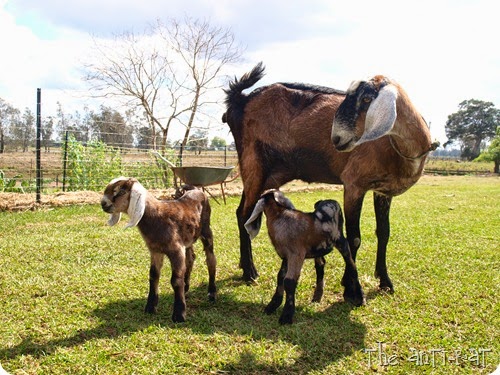
  Nettle produced twin kids, a doe and a buck, with a riveted audience of the whole family. Anglo-Nubian kids would have to be one of the cutest baby animals, even if their bleats do sound like someone’s torturing a human child.

P9045622 P9045615

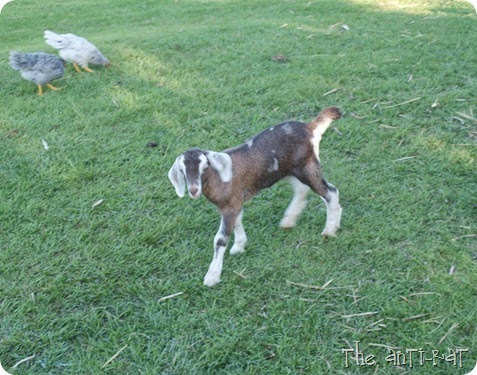
  The doe (on the left above) became A’s, and she called her Blackberry. We called the buck Grub (because that’s what he was going to be) but decided after a week or so that we’d rather have the milk, and gave him away.

  Now we were at three goats, with Guava due to kid. She did, again with an audience (and a little assistance from me), and produced a single doe. She was half Toggenberg, and a very strange looking goat. We called her Donkey, because that’s what she looked like at birth, and again gave her away very young-we were interested in Anglos and milk, not raising half-breeds.

  PA226088

  So we had lots of milk to drink, we were making cheese and soap, all was going well………then Guava started sending us mental. Never a fantastic forager, she decided she wasn’t going to go looking for food on the couple of hundred acres she had access to, but would stand at the house yard fence and bleat for hours, expecting us to go out and feed her. Every day. We tried a few things to fix this, but after a few incidents involving the husband, Guava, and hurtling shovels and such, I rang up the woman i’d bought her from and asked to swap. Yes, that was fine, but the only other Anglo-Nubians she had weren’t in milk. We accepted the drop in milk for the peace it would bring, and Bracken came home with us.

PC176425

  She worked out beautifully. Her and Nettle were excellent together, and foraged well. Blackberry adored her as she was still a bit young and fun. But the damage was done, and the husband had no tolerance for any bleating from them. He found them irritating and infuriating, and made that quite clear on a regular basis. In the end I had to shrug my shoulders, admit that they weren’t the best dairy animal for us right now, and family harmony would be better. A agreed, so they were sold to a local family.

  I miss them more than I thought I would. I had a purpose in caring for them and milking them, and . I spent a lot of time outside with them, and I really enjoyed their personalities-I didn’t fully realise how much until they were gone. A also seems a bit lost without her pet-she used to get up at 6am with us every single morning and come out for the milking, but now she mostly stays in bed and reads.

PC146416

  So I will get goats again-I may have to spend a bit more money and care on the setup to ensure they don’t bother anyone else, but I think they’re worth it.

Thursday, May 15, 2014

Welcome Xanthorrhoea, with your abundant milk.

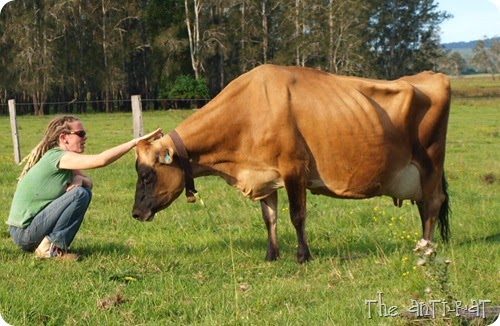
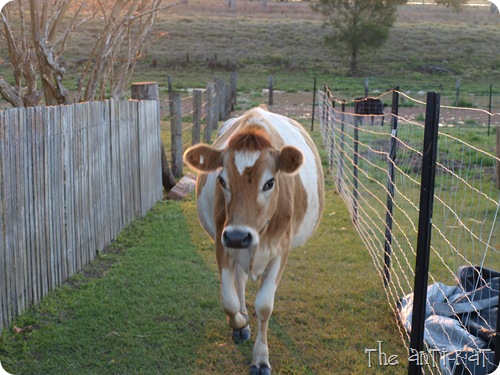
  Life really sucked there for a while, when i’d sold the goats, Melaleuca was dry, and no farmer would sell me a decent Jersey cow. Shop milk is absolutely awful when you’ve had the real thing. But I persisted, and harassed one poor man enough that he sold us a cow, probably to shut me up. And what a lovely example she is.

P4257254

Following the Australian plant names theme, she was renamed Xanthorrhoea. It’s a bit of a mouthful, but the grass tree was the only thing we could think of that really suited her black markings. She gets Xanthe or Zan for short. She’s so quiet she makes Melaleuca look troublesome.

P4257253

    She did give us a stressful initial 10 days-she wouldn’t eat anything we offered her, except grass. A fresh Jersey making 16 litres a day needs more than grass to keep that sort of production up. She’d nibble a little lucerne, but no grain. The home butcher, who was out here at the time, diagnosed depression (he called it sulking) at her change in lifestyle. We bought a couple of different feeds to try-she snubbed her nose at them. Her milk was dropping alarmingly, and we were starting to entertain the horrible notion that the cow we bought for abundance might end up dropping to six litres a day, six weeks from calving. I systematically went through our pantry until I found she liked barley. Back we went to the stockfeed, bought two types of barley, and she finally began to eat! Only small amounts, but barley with a little copra and some lucerne at least gave her some extra protein.

Then we decided that stripping her out was inefficient and rather stressful, and we’d rather go back to the calf system we had with Melaleuca, where a calf finishes her off at the end of milking. You need to give the calf a fair bit of milk, but in exchange they empty the cow very well and keep the stimulation up so she’ll keep producing more for longer. And you get beef, so really they’re just a delicious long-term milk storage option. Friends with a dairy were happy to send a Friesian bull calf our way, and Xanthe liked him. A lot. So much that she perked up, fostered him without any hesitation, and began to eat ravenously. Her milk supply rose again, so now we take six to seven litres in the morning, then the calf spends the day with her and takes the rest.

  Three weeks in she’s very interested in food-she’s not quite the walking garbage disposal that Melaleuca is, but she’s getting there. It’s been a very good lesson in cow management-and I will never again forget to ask to buy some of the feed the animal’s used to when buying something new!

Saturday, May 3, 2014

Leaving Unschooling Behind

  Ah, unschooling. You seemed adequate for many years, but then the flaws started to become apparent. Most of the skills that are supposedly picked up automatically just weren’t-and not through lack of resources or exposure. The girls wanted to write stories and letters, but their handwriting and spelling was below their needed level, so they would get frustrated and give up. They were reading many good books, but had no internal filing system to sort out and categorise what they were learning. Oods wanted to learn Latin and violin, but you can’t really unschool either. The clones were becoming feral children, spending all day on the trampoline or in the sandpit playing pretend. Shorty needed more structure, more repetition, to allow him to master his basic skills. And I was looking at all of that time essentially wasted, thinking, ‘They could be learning so much more’. Which apparently is me projecting unfair expectations onto them based on my insecurities, and not at all based on me thinking that my eight year old really should be able to spell ‘because’ and write it without a reversed b. Because she wants to.

  So I did my usual reading blitz, and we’ve now totally shaken up our home education. The kids get a say in what they learn about, but generally they have an insatiable desire to learn about everything. In the last year they have learnt an incredible amount, and they’re incredibly proud of themselves. They’re challenging themselves and meeting the challenges. Their pretend play has always been varied and complex, but now it’s so educated-seeing Frosty, at 4, re-enact the Iliad is very impressive.

  I’ve noticed that they’re much more content. Arguments are rare when they have their minds challenged and hands busy. This goes for me too-I always felt kind of useless wandering around, giving a bit of assistance here and there, but generally feeling like they didn’t need me. And i’m having the most fantastic time. Not many adults get to fill in the gaps in their learning, and i’m finding it all insanely interesting.  I can see how incredibly useful the chronological history, the formal grammar, and the phonics has been to me already. This sort of stuff may not be on most school curriculums, but it’s the sort of thing I find myself using regularly (and feeling cheated that I was never taught it). And the more I give them, the more they want. Two weeks into this year’s work, I was feeling frazzled with our new workload-and they were asking me if I had anything else they could do. Like Chinese, and poetry, and can I please find some more maths puzzle books for them to do? They want more of everything (except dictation, which they believe is evil torture even as they acknowledge how useful it is to them).

  I have come to the conclusion that unschooling just isn’t for us. Looking critically at my experience, I can’t see how it works effectively for anyone over toddler age, if your goal is to have a well-educated child. I have also come to the conclusion that childhood is by far the best time to learn as much as you can, while you’re young and hungry and have no other commitments, and it is my job to make it easier for them. Unschooling seemed a bit like requiring your children to reinvent the wheel-sure, you can saturate them with words, and lots of kids will pick up reading all by themselves. But it seems a cumbersome, difficult process to require them to puzzle it out when you could sit an eager child down and do some phonics instruction, explain how English works, and have them reading in a tenth of the time. (And so that’s why that’s exactly what I did, and i’ve had three five year old readers so far. Frosty is working on it, and Shorty runs to his own timescale, incomprehensible to the rest of us). I never understood why unschooling seems to require your child stumble around in the dark, until they have their lightbulb moment and can finally puzzle out exactly how Latin verb endings work after much frustration-why not explain it and have them memorise them, and that’s that? Or, to paraphrase Ruth Beechick (because I can’t find the quote), why expect them to be creative when they have nothing to be creative with?

  Unschoolers tend to portray any curriculum work as a violation of freedom, but when it’s by choice, it can be wonderful. Seeing the unbridled excitement and pride of my girls when they finished FLL 3 was wonderful-they had worked hard and achieved something because of that. What a valuable lesson. They have in no way lost any freedom. They have hours every day of total freedom, and now they appreciate it because they feel they’ve earnt it. They have a balance between time they’ve scheduled for learning and free time, so they appreciate and value both much more than ever before.

  So, unschooling? Been there, done that-not impressed. We’re too motivated and eager for that. Bring on the bookwork!

Saturday, January 25, 2014

How to ferment vegetables-without the billion dollar price tag!

  I was all excited a few months ago when I saw Sandor Katz was coming to Australia to run fermenting workshops. I was even more excited when I saw that there’s going to be sessions in Byron Bay. Yippee, I thought, I can go to one! Then I went to the pricing page and nearly had a heart attack. $490!?!?! The intensive sessions in Sydney are similarly gob-smacking. $220 for just vegetables? $220 for just dairy? $792 for the whole lot? Chest pain turned into disbelief. We already ferment a lot of stuff. We regularly make kefir, yoghurt, cheese, mead, sauerkraut, and all sorts of other fruit and vegetable concoctions. And it’s really not very hard. Or complicated. Or time consuming. We’ve learnt it all by experimentation, using books, other than a one-day cheesemaking workshop I did with Elisabeth Fekonia (which was very comprehensive and reasonably priced). How on earth can they justify charging such astronomical prices? All of Milkwood’s prices are at the high end of the scale, but this goes beyond expensive into unbelievable. But then I suppose that’s why they’re still pumping the advertisements for it-it would have booked out months ago at a more reasonable price.

  Here’s my rebellion. I’m saving you by showing you how to ferment vegetables into a deliciously sour and tasty mix. It involves 3 steps and about 15 minutes of your time.

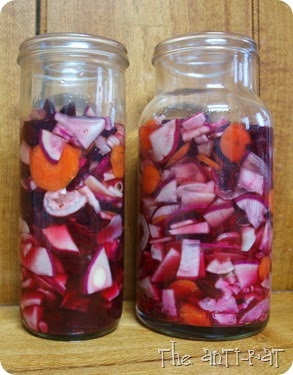
1. Chop thinly, or grate, your vegetables. I have radish, carrots, and beetroot here. Cabbage and other cruciferous veg work well (think sauerkraut). Feel free to throw in herbs, chillis, or anything else of plant origin that you think will taste good. The better quality your ingredients the better the end result-we grew all this. Throw it in a big bowl and mix in generous amounts (a few tablespoons?) of salt-real salt, like Celtic or Himalayan, not iodised table salt. If it tastes quite salty but it’s not crusted, it’s about right.

 P9115691

  Stuff it into jars, and let it sit for a couple of hours. The salt will suck the juice from the vegetables.

 P9115694

2. Then pack it down as much as you can. I use a granite pestle. If the juice extracted by the salt covers the vegetables, then put a non-airtight cover on and you’re done. If not, add enough filtered water to cover it. Taste the liquid-it should be salty like the sea. The salt will exclude any harmful bacteria, so err on the side of too much-you can always rinse it before eating it if you overdo it.

P9115695

3. Let it sit at room temperature. Each day, make sure the vegies are still covered by the liquid, and pack it back down if need be. It wants to float. Taste it after a few days-if it tastes good, put it in the fridge and eat it at leisure. If you’d like it stronger, leave it to develop longer.

 P9145716

  That’s really about it-you can get fancier with the ingredients you use, but the method is still the same. I highly recommend both of Sandor’s books for making fermenting interesting and accessible. There’s Wild Fermentation and The Art of Fermentation.

  And if you want to send me money as a result of your effusive gratitude in saving you so much money, my bank details are………….just kidding!

Thursday, January 23, 2014

Why i’m happy to tell my kids that school is a totally inferior way to get an education

  A recent conversation with a friend got me thinking about the justifications for telling home educated children negative things about schooling. I said it was necessary to counter the misguided societal perception (aka propaganda) that school is a wonderfully fun and enriching place where you can gain a wide-ranging and deeply fulfilling education that will serve you well throughout life, as well as providing you with life-long friends. It’s what most people would like to believe, and it’s what they tell us misguided misfits whenever possible. She thought you should keep the negatives about school to a minimum, to not try to influence your kids too much, which is the standard answer. However, thinking about it some more, I started to wonder just why it is that we feel censored from sharing our views of school with our children. Why is it so important to protect schools from criticism that many dedicated home educators feel they cannot speak a bad word against school to their own children, in their own homes?

  In other subjects, such as religion, we can tell our children whatever we like. We can tell them that God created the world, Mohammed was the prophet, we will cycle through rebirth guided by our karma, or that the lot of it is made up by people needing an explanation for things we can’t explain. We have the authority to explain faith in whatever way we choose, consistent with our beliefs.
  So why not with school? I think school is a terrible way to get an education, is more likely to result in abnormal behaviour than well-adjusted socialisation, is a violation of freedom and personal rights, and is all around fairly abysmal. So why can’t I share those (well-founded) views with my children? Why is school seen as somehow sacred, indeed more sacred than religion? Why should I bite my tongue (I don’t) while other people tell them how wonderful school is, how much they’re missing out on, and wouldn’t they love to have a schoolbag?

  What does this say about society as a whole, that we’re so determined to protect an institution that has a rather average track record of doing what it purports to be its aim? Why is it that we can say that the system needs to be overhauled, that we need to do more of this or less of that, that failure is the fault of the students/teachers/method, but we cannot say the the entire system has proven itself a failure? Why don’t people take a long, hard look at their own experience and wonder if school really did contribute to their adult happiness and success, or whether it has left more negative legacies? Why don’t people wonder if their precious time, a whole 13 years of compulsory attendance, or over 1/6 of their projected lifespan, could have been better spent?

  Or, for the million dollar question, why do people accept anything unquestioningly? Keith Farnon has some excellent ideas on why.

  Now I have my justification clear-they’re my children, and I can tell them whatever I like. It doesn’t have to agree with your views, or the majority view of society. As long as I am telling them my honest views with no ulterior motive of manipulation, i’m not doing anything wrong.

  School’s crap. So there. Just ask my children!

Tuesday, January 21, 2014

From grass to bulging veggie garden in under six months

  I’ve been reading tutorial posts elsewhere about starting veggie gardens, and no wonder people give up on the idea before they start. Why do people have to complicate things which are actually quite simple? Or turn it into a mammoth shopping list that makes buying vegies for the rest of your life seem like the cheap deal?

  We are experts at starting veggie gardens. Before you pass me off as an up-myself snob, remember that the husband and I have lived in well over 20 houses in our 13-odd years together. Starting them, we excel at. Learning to keep them going well for years………..well, maybe one day we’ll get the chance. Our way involves using your muscles for the initial start-up, but not your wallet. Most people could do with using their muscles more, so don’t be shy-get out there, toughen up, and do some work you can be proud of and reap the benefits from for years.

PC246470    200sq/m, less than six months

Here’s our well-honed method.

  Pick a sunny spot. Here in Australia, with our intense sun, you can get away with some shade. But try to minimise it. If you have lots of shade everywhere, go ahead and do it anyway, but resign yourself to leafy veg. Under trees is also not so good-they’ll steal from your vegies. Start with a manageable size-you can always expand later once your original area is set-up, but beginning with a huge area can be discouraging.

  Peel off the grass. All of the grass. A mattock is the best for this. You may think you want lovely grassy paths, with rocks/sleepers for edging, but you don’t. Well, you won’t once the reality of them sinks in. Grassy paths suck the nutrients and water from your garden, and the grass invades through your pretty edging. Without herbicide, you’ll have a grassy garden fairly quickly. As you’re not a ruminant, and cannot digest the grass, that is bad. Make a compost pile with the sod.

PA226067

  Dig over the dirt. It doesn’t need to be deeply dug, just rough it up a little. A fork is good for this-sink in the tines, wiggle it around and lever it part of the way up. Repeat. Throw on as much manure as you can get-fresh, old, from any farm animal will do. Manure is plentiful, and there’s always people around wanting to get rid of it-find people who keep animals and don’t garden, try stables, ask any farmers you know. Ask on local online groups if anyone wants you to come around and clean up their mess. You’ll meet some interesting people. We’ve spent a lot of time wandering in paddocks picking up muck-but we most definitely don’t go to Bunnings and buy bagged manure. Actually, we don’t go to Bunnings ever, but that’s another story.  Spread the lovely muck over your dirt, and inhale the beautiful stink-that stink is the smell of fertility, and future food for you.

Cover the lot with mulch. Sugar cane, lucerne, pea straw, whatever’s available in your area. Again, if you look you can usually pick up bales of straw fairly cheaply from the side of the road. Or, you can rake up the council mowings from the side of the road in the country. Water it well, then rest your aching muscles for a week or so.

  Now, it’s time to plan. Decide where you want your beds to be, and tramp paths around them. Stomp down hard and you should soon be able to see them clearly. Your paths will be manured and mulched just as heavily as your beds-and why not? Your plants can spread their roots out there, so lets make it tasty for them. (Admittedly, we currently have bare paths, but we have an unfair amount of local red-bellied black snakes). Make sure your paths and beds are a decent width, but that you can reach the centre of the beds. Water it again.

PB246297

  Plant seeds, according to season. Scrape the mulch back, make sure the soil is damp, break up any clods if needed, and plant away. Seedlings are too much bother-home-started seedlings have their place, but for now it’s an unnecessary complication. Keep it simple. Plant your plants at random, forget about neat beds of one type of plant. Lettuces grow well in the shade of other plants, radishes grow so fast you pull them before the tomatoes next to them are big enough to be bothered, and so on. In the beginning your germination will be poor, so plant thickly. You can always thin, and eat the thinnings. But you want success, so go crazy. Seeds are cheap. My favourite supplier is Rangeview Seeds.

PA226069

  Keep in watered, and watch it grow. Attention is the key-go for a walk around it every day. Get down low, and really look. Learn what your plants, and your weeds, look like when they come up. Keep an eye on the bugs and work out which ones are helpful, and which you should feed to the chooks. Learn what grows well together, and what doesn’t. Work out what grows really well in your area and gather lots of recipes containing it. Conversely, learn what you shouldn’t bother with, as it gets struck down with pests/disease, or hates the weather. This step is not optional if you want garden success-it doesn’t take much time, but attention is the difference between success and failure.

 PC286496 A visitor in the corn patch

  There you go. You’re a gardener. That wasn’t so hard, was it?

Monday, January 20, 2014

Cobb vs Australorp, eight weeks old

  australorp cobb eight weeks

  Well, I can definitely see why there are meat-specific chickens! At the same age, one chicken is almost a meal while the other is a baby. We bought four day-old Cobbs to try out, and they certainly grew quickly. However, we’ve now eaten them, and a few of the excess Leghorn and Australorp roosters, and the latter two definitely taste better. The slower-growing ones have a much stronger taste and firmer meat, with more colour. And that’s with the Cobb being free-range and foraging a lot-not restricting their movement and pumping high-protein feed into them like commercials.

Verdict-we’re happy to eat the excess roosters and leave it at that. If I was going to raise a meat-only small animal, i’d do one that didn’t require much bought feed, like rabbits. I assisted with a friend’s rabbit harvest recently, and I was very impressed at how quick and easy it was compared to a chicken. Chickens are too feed-intensive and laborious to butcher.

  And after writing those last two sentences, i’m giggling at the fact that just over a year ago we were freaking out at our first upcoming chicken harvest. Oh, we’ve come a long way.

Monday, December 2, 2013

My family is weird

  While transferring photos from the camera to my computer, I came across this.

PB276330

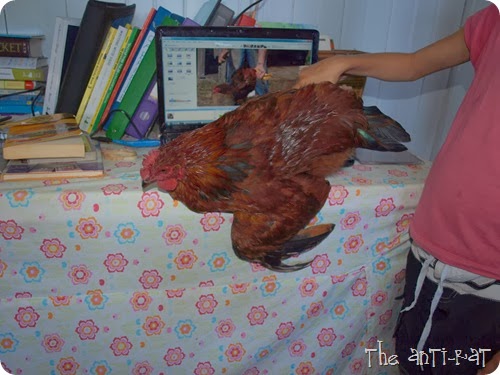
  Lols, holding a chicken chopping-block style, on the table in front of a photo of the husband holding a chook on an actual chopping block. This table is in the kitchen-thankfully not the one we eat at. On questioning, this is because they wanted to see if this rooster (bought as a day-old brown Leghorn, but most definitely is not) is a Rhode Island Red. The only photo they could find of our mature Tasmanian RIR roosters were harvest day ones. So they were comparing.

  Conclusion-we don’t know what he is. And the hatchery (Darling Downs, aka Peak Poultry Supplies) is ignoring us, so I guess we’ll remain ignorant. Sadly, after we pick out the sub-standard appearances from our purchase, we’re only left with about 12 breeders in the three colours. These seem perfect, so we’ll cross our fingers that we don’t get any funny-coloured throwbacks when we start hatching them.

Tuesday, November 19, 2013

My life’s so picturesque it even makes me want to vomit

  It’s been especially nice, recently, to realise that this farming life of ours really is the most wonderful way to live. This was emphasised at 6am a few weeks back, when the alarm went off  and the husband offered me a morning off milking and a sleep in-and I refused. On my 30th birthday, I much preferred to get up early and spend time with our goats and cows, outside in the fresh air, than sleep in for the first time in months. Not many people can say they’re so eager to get out of bed every morning.

P9305872

  I feel fitter and healthier than I have in my whole life. I’m outside every day, using my body for meaningful tasks. I have better muscles than I did when going to the gym, and I got them without really noticing. Hauling bales of hay and carting wheelbarrow loads of manure will do that-the husband and I call it ‘farm gym’. We’re eating like peasants, with plenty of vegies straight from the garden, raw dairy, and sourdough bread. The kitchen is a chemistry lab of good things to eat, with ferments bubbling away, preserving jars filling, and of course the magical alchemies of cheese and butter. And really, anyone would be happy when the amount of cream passing through the kitchen can be measured in litres.

 P9275799

P9305978   Poor confused calves, they think i’m their mother

Most surprising to me is just how much i’m enjoying the animals. I wouldn’t have called myself an animal person before now-although I like chickens I don’t like dogs and i’m indifferent to cats. And I hated the guinea pigs. Now the kids call me the crazy goat lady, because I really like my goats. I regularly wander over to sit down and have a scratch and a chat with them, they follow me around like dogs, and fondly nibble my hair while i’m milking them. I spoil them rotten with warm molasses water and armfuls of organic silverbeet that city folk would pay $30 for at a farmer’s market.

P9085660   Not sure why they call me the crazy goat lady…….

  It’s also been exciting to have our future farm take shape. We’re getting a real picture of what we plan to do and why. While we’ve always known we wanted to have land, we didn’t really know what we planned to do with it, and how we planned to turn it into an income. Which is why we didn’t last at our first acreage-we bought it because we liked it, without the cold hard light of practicality and forethought. Now, with another five years of experience in gardening, animals, and life in general, and many more mistakes under our belt, we’re rather older and wiser (I hope). We’ve started slowly looking for our piece of land, but we’re in no rush. In the meantime we’re concentrating on setting up with our herds and flocks, and continuing to skill ourselves up.

  This is not to say we’re perfectly content-the lure of travel still calls, and i’m really not sure if we’re ready to settle down just yet. The thought of more travelling, this time in a caravan (oh, the comparative luxury!) still has some allure. And we like change, and new challenges so much that everyday life can seem a bit……..everyday, sometimes. But we’ll decide all in good time-until then, i’ll keep eating ice-cream every day. It’s a hard life, but i’m up for the challenge.

Tuesday, September 17, 2013

I think our Pekins are too tame.

  We’ve found eggs on beds on a few occasions recently-i’m hoping to discourage the practice before someone flops onto their bed and splats one………..

P9065631

Thursday, September 5, 2013

NSW Board of Studies destroys educational freedom

  I’ve just finished reading the new ‘Home education info pack’ from the NSW BoS. Those of you in the home ed community will know the furore this has created-I admit, it was a rather entertaining read. They’ve been unequivocal about their intent to force homeschoolers to comply with their will. Let’s look at some salient parts, shall we?

Home schooling, also referred to as home education, requires a parent to deliver the NSW Board of Studies curriculum.

  There it is, right in the introduction. If that isn’t throwing down the gauntlet, I don’t know what is.

As with other forms of education, there is no single approach to home schooling. Regardless of the approach to teaching, the educational philosophy that might be adopted and/or the learning context for each child, the requirements for registration must be met at all times during any period of registration.

  In other words, screw your approach. Bend to ours. There is no room whatsoever for any approach other than school at home in this document.

The visit provides an opportunity for you to demonstrate that the educational program you plan to deliver will comply with the requirements for home
schooling registration.

  It is amusing how often they state this. There is virtually nothing about showing that your child is actually getting educated-I think they believe that is synonymous with their beloved requirements. I’m not sure how forcing parents to take at least ten hours a week to fill out paperwork and records related to their child’s learning will be better than them spending that ten hours choosing and doing activities with them.

Whether the time allocated is comparable to that allocated in schools

  Any home educator knows that you can cover the same material in less that a quarter of the time-one to one teaching, at the child’s speed, compared to classroom teaching. Bah. But you still have to come up with records for 30 hours a week, per child.

    • there is an adequate system of planning, supervising and recording teaching and learning
      experiences.
    • there is an adequate system for recording the child’s progress and achievement

  Those two bullet points spell out hours of pointless paperwork every week for the parent. I mean, who are these arrogant parents who believe that they can see progress in real terms, because they spend hours every day with their children? Now, you have to prove it, in every area.

It may also be an important document if enrolment is sought in a school, TAFE college or other educational institution at some future time.

  Veiled threats, anyone? Who’s guessing that your registration form will soon become mandatory to enrol in the above-sorry, but you can’t enrol in this TAFE course which has no prerequisites. Your naughty parents ignored the registration requirements, therefore ruining your life! Bad parents.

You must notify the Home Schooling Unit…….if you intend to deliver an educational program for Years of schooling other than those specified on the
certificate of registration

  Above or below age level in any areas of any subjects? Sorry, but you’ll need permission to deviate from the average. We’re aiming for average children here-and parents, how could you think you’re qualified to assess their abilities? Please don’t touch the next level textbook until you have permission-meanwhile, do what bored schoolkids do, stare at the wall and count the minutes! It’s education.

The registration process may take up to three months from the time an application is made to receipt of a certificate of home schooling registration.

  They repeat this a lot, too, and stress that you cannot remove your child from school until it’s done. Severe bullying? Too bad, suck it up while the application sits on someone’s desk gathering dust. Maybe they’re modelling it on the paperwork system in the refugee detention centres?

If your child’s home address changes from the home address specified on the child’s certificate of registration, you must advise in writing the Home Schooling Unit providing details of the new home address. On receipt of notice that the home address of a registered child has changed, an Authorised Person will contact you to arrange a mutually convenient time to assess the new home for its suitability for home schooling registration. If suitable for home schooling, a certificate of registration specifying the new home address will be issued.

  Ah, their precious learning environment. I’m guessing that doing bookwork on the dining table, reading up a tree, or science in the kitchen won’t be counted as a suitable learning environments. I imagine this one will be used to exclude any number of applications by default-if you don’t have the space or money for a dedicated classroom with all of the accessories, too bad. Because you can’t learn outside a classroom, can you? Or maybe your equipment won’t pass the test, if you don’t have Bunsen burners and lab equipment, full sports supplies, or a cupboard full of art supplies? Even though we all know that the average school child gets very few opportunities, if any, to take full advantage of the school equipment provided-it’s just there to look good and wave around to visitors.

(f) courses of study in a key learning area are to be based on, and taught in accordance with, a syllabus developed or endorsed by the Board and approved by the Minister.

  Individualised curriculums, based on your own family’s conviction of what it is important to learn? Your opinion counts for nothing. You are to follow their syllabus to the letter-if you think anything else is important, jam it in outside your equivalent allocated school hours. Our current chronological world history study would be replaced with ‘personal and local history’ (like you can’t cover a six year old’s personal history in an hour), Auslan doesn’t fit in anywhere (LOTE isn’t mentioned until high school), and can you imagine the conniptions the “Authorised Person” would have on finding that the children don’t use the computer? Because it’s in the requirements in the syllabus for every subject from a young age. No room for a philosophical objection there.

  Well, here’s my gauntlet, BoS-if this goes through (and I have no doubt that it will, with no significant changes), i’m moving interstate. I’m not wasting my time filling out reams of paperwork when I could be doing meaningful activities with my children, and I refuse to be welded to a curriculum and system that churns out thousands of failures (through no fault of their own) every year.

  That is the most offensive part-your system is filled with problems, and you insist on forcing it upon people who are doing a whole lot better, all by themselves. With no educational degrees, not following your system, and not using your resources. Ordinary, unqualified people are producing children that are happier, better educated and more well-rounded than the average school child. I’m not biased either-it’s been measured in a number of studies. But you can’t be having that, can you? Spending billions on education and still not achieving the educational average of parents around their dining table looks terrible-so instead of improving the system, you’ve decided to drag us down with you.

  As always, we’ll take the contrary option. We’ll jump ship. Again and again and again if it means preserving our educational freedom. We will not submit to arbitrary control when the source of that control can’t even demonstrate success. And I don’t imagine we’ll be the only ones-us home educators aren’t generally ones to toe the line. They’re already getting a good demonstration of that.

Wednesday, August 21, 2013

Unradical Unschooling

  When we first decided to home educate, about 7 years ago, I did what I usually do upon gaining a new interest-I read. I read my way through every home ed book in the Tasmanian library system (there’s many, the wonderful place) and fell in love with unschooling. With a houseful of toddlers, it worked for us. Then, about 5 years ago I noticed more and more popping up online about radical unschoolers, so I investigated. Basically, it’s about removing all limits, rules and expectations. The child decides everything, and trust is the buzzword-just trust that your child is doing exactly what they need to do, right now, even if you don’t understand why (even if it’s killing related, completely clashes with your beliefs or involves 14 hours a day on the computer). That when you get in touch with yourself, and your true way of being, you would understand, that you would be free! Then the world will be a better place, populated with ‘free’ people.

  Well, call me a reject, abjectly out of touch with my true self, because I really don’t get it. Oh, I thought about trying it, but I never accepted the reasoning behind it. It sounds all lovely and wonderful, but it’s like every other extremist viewpoint-all dressed up in flowery language and sounding suspiciously religious (you just have to believe, to have faith, to let go, then you will be truly free). It doesn’t respect the family’s value systems. And of course, there’s lots of criticism of schools. While I don’t see many positives in the school system, I also tend to distrust beliefs that need to knock their opposites down for them to climb up-if it’s as good as you say it is, it’ll speak for itself.

  I finally realised that I really don’t like the philosophy because we’re technically not child-centred. We’re family-centred. There’s seven of us in this tribe, and we all need to get along, which means we all need to take everyone’s needs and wants into account. I’m happy to cater to every whim of a three month old, but as they get older they learn to compromise too.

P8125372

  Old fuddy-duddy that I am, I believe in bedtimes, for their and my sanity. My kids eat what they are given. They contribute to the running of the household, the garden and the animals. Screen time for them is non-existent (and nearly non-existent for me, I practice what I preach).And sometimes i’ll make them do something, even if they think they won’t like it. Usually, after the initial push, they enjoy it. (A recent incident with Sparkles and handwriting practice comes to mind. She said she didn’t want to, I said it wasn’t optional. Fifteen minutes of copywork later she was ecstatic to see how much she’d already improved, and now happily does it regularly). Sometimes you need a kick to try something-and when the kick is given by someone who knows you well, it’s usually a kick in the right direction.

  RUers seem to believe that if a child must fit to some of the parent’s needs, that the parent is selfish and enforcing their will upon the child. It seems to me to be a sure recipe for stress, guilt, and the extension of extreme natural parenting philosophy (which also seems to be a sure recipe for stress and guilt). And if I have to honour every decision of my child, what is that saying about my knowledge and experience? I definitely don’t know it all, but surely nearly 30 years of life counts for something? The kids certainly seem to think so-they trust my judgement and respect my recommendations, and are generally happy and eager to see what I suggest. In return, if they have a go at something and hate it, I don’t force them to continue.

P8125341

  Over the past couple of years, i’ve found myself adding a qualifier when asked which education method we use. ‘Unschooling…………but not radical.’ Unschooling seems to have gained more and more of a radical aura, to the point where most people who once would have called themselves unschoolers seem to be using the term ‘natural learners’ instead. Unfortunately, unschooling now seems to mean the extreme end of the scale-no rules, no schedule, no educational goals.That is completely not us, and to be honest I really wouldn’t like people to think that it was.

  However, after the initial raves, RUing seems to be losing popularity. I’ve started to read accounts of people who have tried it and found that their lives descended into chaos and their kids were unhappy (such as Owlet-there’s also good comments there). Most people seem to adore it when their children are young, then by the time they’re reached about 8 they’re looking to add a bit more structure (usually at the child’s request). I think it’s because toddlers can generally pick up what they need to know in their everyday life. But when they start wanting to learn more complex skills and knowledge, structure really helps. It also helps Shorty, who doesn’t pick up much intuitively, and requires more repetition and graded increase in difficulty to really master a skill.

  Anyhow, I don’t even know if we could call ourselves unschoolers anymore-I have a houseful of academics now! But i’ll save writing about those changes for another day.

Monday, August 19, 2013

Cheep cheep!

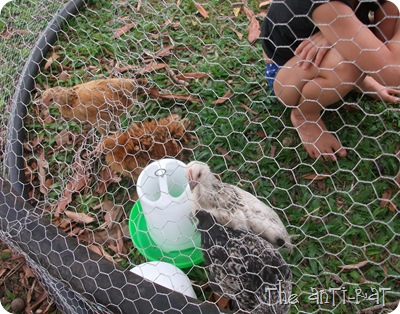
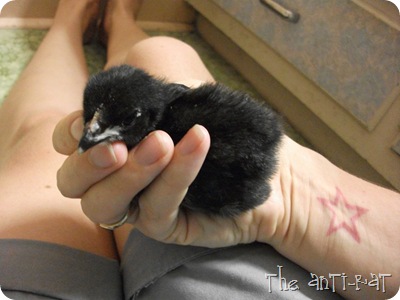
  Our new babies finally arrived-36 day-old chicks. We have 11 Blue Leghorns, 11 Brown Leghorns, 10 Australorps (sadly, one died in transit), and 4 Cobb. They’re currently living in the kitchen next to the fire (which really doesn’t need to be on for humans during the day right now, we’re roasting) and being mollycoddled by everyone. We’re raising them on real food, not chick crumble (I won’t use anything medicated and highly processed), and keeping records on their growth. We have raw milk now for protein, and the rest is easy now we have a grain mill to crack grain. It will be interesting to see how they grow, and how it matches up to ‘standards’.

P8145401

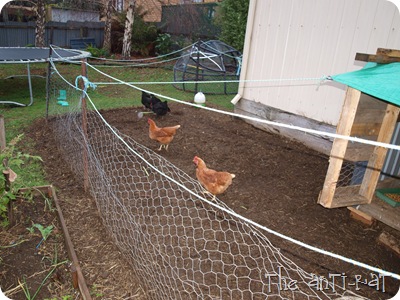
  And, in my chicken retrospective, I completely forgot our Pekins! The kids got a Pekin each when we arrived here-although laying breeds are scarce, ornamentals are common. Sadly, Frosty’s Snowy met an untimely end after playing with a dog. But we’ve still got four. They’ll be our incubators, once the littlies above are big enough to lay viable eggs.

P7164937

  They’re easy to forget about-they’re quiet as can be, and the kids have reached the age where they can look after them independently. I do like them though-they’ll quite often jump onto my lap. One was assessing me for an egg-laying spot recently, but decided against it. All in all, they’re miles better than the silly Silkies we had.

Saturday, August 17, 2013

Happy (belated) birthday, husband

  I promised the husband a Jersey cow for his 30th birthday last year. However, we were in Tasmania, and not planning on staying, and it’s a little hard to move a cow over an ocean.

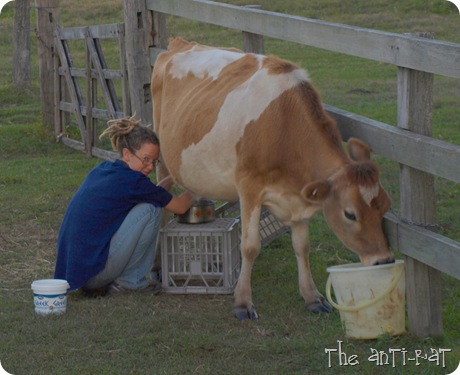
So he got an IOU. And when we got here, he called it in and reminded me that it was time to go searching. We found Melaleuca, and she’s been wonderful. Placid and tolerant, she’s ex-dairy as she wasn’t producing enough milk for them. The Friesan-Angus calf came with her-we called him Tucker, because that’s what he’ll be. He’ll be our first beef in about five years-we’re sticking to the ‘only meat we raise’ rule.


P7265002

P8105307

P7264986

  She’s quickly become something like an oversized dog-she gets pats and handfed tidbits by the entire family. She’s not a big fan of the kids riding her, but that’s understandable. She’ll get used to it. She’s also getting used to playing soccer. And although she is most definitely the husband’s pet, I get to have a shot once in a while. Note the milking setup-as it’s rather difficult to scavenge a stainless steel bucket, it’s looking like we may actually have to buy one. New. Eventually.

P8095255

  We haven’t bought any dairy for four weeks now. We have as much milk, butter, yoghurt, labne, kefir and cream as we need, and then some. I haven’t got enough to make hard cheeses yet, but considering she’s giving us at least three litres a day and then topping up a calf……………what on earth will we do when she’s giving us fifteen litres a day? Or more? I’m happy to meet the challenge though-I love abundance.

Tuesday, July 23, 2013

A chicken retrospective

  We get 37 day-old chicks in four different pure breeds next week. And it got us to thinking, how many chickens have we had over the years? I worked out it’s about 76-here they are!

 DSCF3415

   First up, four White Leghorns. Rather flighty (I had to tackle them out of their perches in trees quite a few evenings) but good birds.

 DSCF5448

   Next, four New Hampshire hens with their rooster. The rooster was a big wimp, and ran away one day when a dog visited. The next one we got was just as wimpy! Maybe it’s a breed trait? There’s also a frizzled Australorp that was thrown in with them.

DSCF5509

   A few weeks after that, six Australorp pullets arrived. Very few photos of them, oddly. We also found a rooster for them, the wonderful Spartacus. He’s the rooster that has reached mythical status in our family-fantastic with the hens, he never hurt the children (and Frosty would chase him, grabbing his tail). And he even fathered the chicks-of course in the literal sense, but when they were out with him he would teach them to scratch, find them tidbits and attack any hen that bothered them.

DSCF0600

The clucky New Hampshires made excellent sitters and mother-can’t remember how many the two of them hatched though. Nine maybe?

DSCF0791 Look! He’s parenting!

  DSCF0914


DSCF5173

   Next, we wanted some broody hens, to hatch us lots of chicks. So we got two Silkies. I hated them, they were silly birds, not an ounce of sense in their heads.

DSCF6419

  Then we had to sell most of them off, but kept the three remaining New Hampshire hens, when we moved back to town. We bought this mixed lot, but suspected after a few weeks they were mostly roosters, and gave them away before they started crowing, and our neighbours started throwing rocks at us in protest.

DSCF7003

Three hens past their prime was not enough for eggs for seven.The friend who bought our Australorp flock had an incubator-so we had an adventurous drive thought Bundaberg during the 2010 floods to pick up 15 chicks for ourselves. We raised them, then gave them to a friend to look after while we went south for a month or so……then we travelled, then moved 2500km from her, and as far as I know she still has them. They started laying a week after we dropped them there, literally. I wasn’t happy!

DSCF7016

Then came the packing up, and travelling, and the general horror. Ugh.

P6211944

   In Mount Gambier, we had a horrid time finding hens. We were desperate for eggs after nearly a year, so bought four commercial hybrids (two ISA browns, and two Australorp/ISA). I hated these ones too. Yes they laid well, but only if they got a specially formulated high-protein feed. And seeing as our vegetarian-based ethics means we don’t buy feed with animal products in it, and our anti-GM ethics mean we don’t buy anything non-organic with soybean in it, and there was no organic feed available………….their egg production was woeful. Our conclusion: don’t bother with hybrids if you’re planning to feed scraps and free range, with available grain. They’re a high-performance animal, so they need high-performance feed. Purebreds lay much better on forage and grain.

P9162384

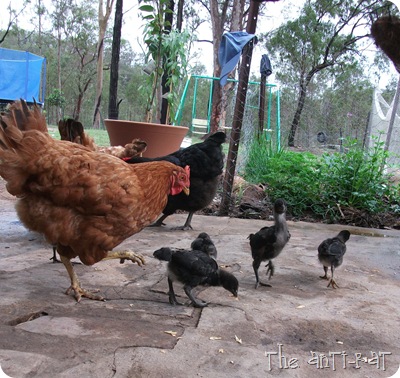
   And in Tassie, we bought twelve Rhode Island Reds hens and their rooster. Eggs galore! I like the RIRs, they’re a bit lazy and dopey but because of that a perfect backyard hen.

PB133016

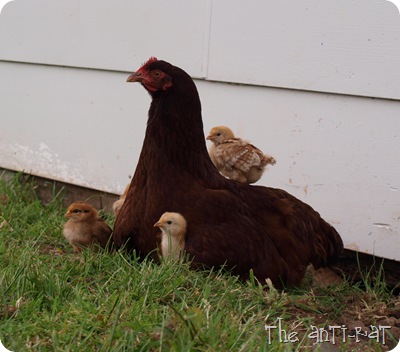
And they go clucky! Even though the books say they don’t. But the books also say the roosters are vicious, and ours wasn’t a bit. Mrs Broody, as our mother of the year was christened, did a wonderful job with her six babies. And we ate the three roosters, so I can vouch for the fact that they taste good too.

PB223132

  I’ll leave you with this photo of our RIR rooster-he came into the house, the kids tried to catch him, he freaked out and ran under the fire and got completely stuck. Luckily (especially for Tasmania) it wasn’t lit, or he’d have been roast chook. I had to drag him out by his tail.

PB143023

Next week (or whenever I get around to it), more chicken blogging! Bet you can’t wait, right? RIGHT?!

Monday, July 22, 2013

Unschooling horseriding

  Pony Club would freak if they saw our method of learning to ride. It goes like this.

  -Acquire pony and gear. Ignore saddles, but wear helmet.

  -Catch pony (can be tricky), bridle up, have sibling hoist you up with assistance from milk crate.

P7064865If you try to catch me, I will run.

-Hold on while wily pony goes straight into a canter. Extra points if you don’t fall off when she deliberately goes under a low tree branch.    

-After a week or so, and a few bruises, you will be able to stay on without holding the mane for dear life. Congratulations! Now you can learn how to steer. And maybe even stop!

  This is basically where they’re up to now. The girls can steer, and sometimes they can stop. Mareea has a hard mouth, so they have to haul pretty hard. Sometimes they’re still holding on for dear life, but they’re improving at an exponential rate. I learnt to ride ‘properly’ when I was a child, learning proper posture, rising to the trot, and all of the excruciating details. I don’t remember ever just going out and riding independently, for fun. Not surprisingly, that love was killed fairly comprehensively, and i’m still not a very confident rider. My kids may never win any awards at the show, but they’ll be able to ride well, and ride hard. And they will continue to love it-which is the most important thing in any endeavour.

  I don’t imagine we’ll stay at one horse for long either. We regretfully had to turn down a gorgeous buckskin brumby colt foal last week, as we didn’t have a yard to keep him in to tame him. But we were all keen to have a shot at taming and training him-when we want to learn anything we’ve found it’s best to throw ourselves into the deep end. We haven’t drowned yet.

Saturday, July 20, 2013

Hello Mareea

  It’s funny what happens when you meet a few people and let it be known you’re looking for animals. They just appear. And on hearing our girls really, really wanted a pony, our landlords mentioned they had an old one up the back paddock we could borrow. We didn’t hear any more for a few months, then one morning they rang and said their son had caught her, and would we like to come and get her? Only……..someone had to ride her home. Guess who was nominated?

P6174449

  Lucky me. As the husband can’t ride, and I had a somewhat horsey childhood, I got to ride the cunning old Mareea home about 4kms. After not riding for thirteen years. I went across country, through creeks and gates, and had her show me some of her tricks-like turning circles while mounting, and her astonishing inability to walk. Even at walking speed she can canter. I had bruises the size of my palm on my thighs from stiff stirrup leathers and my core muscles were agonising for days. Who needs the gym?

However, she is a lovely horse. She’s not nasty at all, just clever. And knowing the three boys (now men) who rode her I can see why-they would have been encouraging her all the way! The kids love her, and ride her daily. And i’m breathing a sigh of relief that we get to try out this horsey business without any outlay of money.

Thursday, July 18, 2013

Feelin’ goaty

  Well, when I said in the last post i’d been doing nothing, it wasn’t entirely accurate. We figure setting up farm means settling in, and we’ve never done dairy before………done!

  The husband has been dreaming of a long-lashed Jersey for years, but I dragged him along to a local woman’s house to look at her goats. Really, she was the perfect choice-she dragged us into the shed, sat us in front of a goat and ordered us to milk-even the kids! But I think she won our hearts when she yelled ‘Stop yanking on her tits!’ to the husband, who was stripping a little too enthusiastically. A few visits and a few weeks later we took our girls home. They came with names, but we decided we needed a theme for goat names, and weeds won-so here are Nettle and Guava.

P6034378

P6034367

P6034372

  They’re Anglo-Nubians, hence the distinctive Roman nose and comical floppy ears. I adore them, and even the husband likes them. What really won him over though, was seeing a calf feed straight from a goat. I never knew they were known as the universal foster mother, and he’s now sourcing Jersey heifers for when they kid.

P7064870 Goats without coats

  Guava (right) is one month into her second pregnancy and is in milk, giving us around 1.2L a day. She’s a dream, placid and easy-going, happy to let the kids and strangers milk her. Nettle is on her first pregnancy, so we’re training her to milk now, hauling her onto the milking stand and getting her used to touch. She’s very leery of touch anywhere except her head and neck, she is beginning to tolerate her back and sides being touched, but go for her teats and she freaks out! Fair enough really.

 P6034353

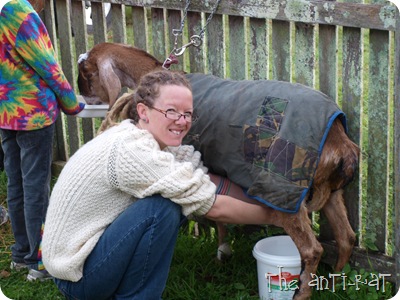
  And milking twice a day? I love it. In this pic, it’s in the first few days (at 6.30am), when we weren’t expecting to bring a milker home. Now we’ve built milking stands and set the shed up quite cosily, which is much easier than squatting on the grass with a child as feed holder. Getting up early doesn’t bother me as it really doesn’t get cold here, and there’s always a payoff-such as sunrises like this. Or a child asking for milk to be squirted straight into his mouth-they’ll regret those pictures as adults.

P6054393

  Milk-wise, it took a little getting used to. It’s not a bad flavour, it’s just different. And so rich! Today I made the first carob i’ve had in about two weeks from boughten milk and it tasted terrible. Oversweet, with a background of cardboard-and it was organic, unhomogenised milk, not homebrand! We’ve made yoghurt, which is beautifully tangy and sharp, and labne which is the same but more so. No proper cheese yet as we don’t have a freezer to store the starter in, but i’m working on that.

All in all? Fantastic purchase. The husband agrees, while working on making the vegie garden look like a maximum security prison. Well, everything has its downsides, right?